
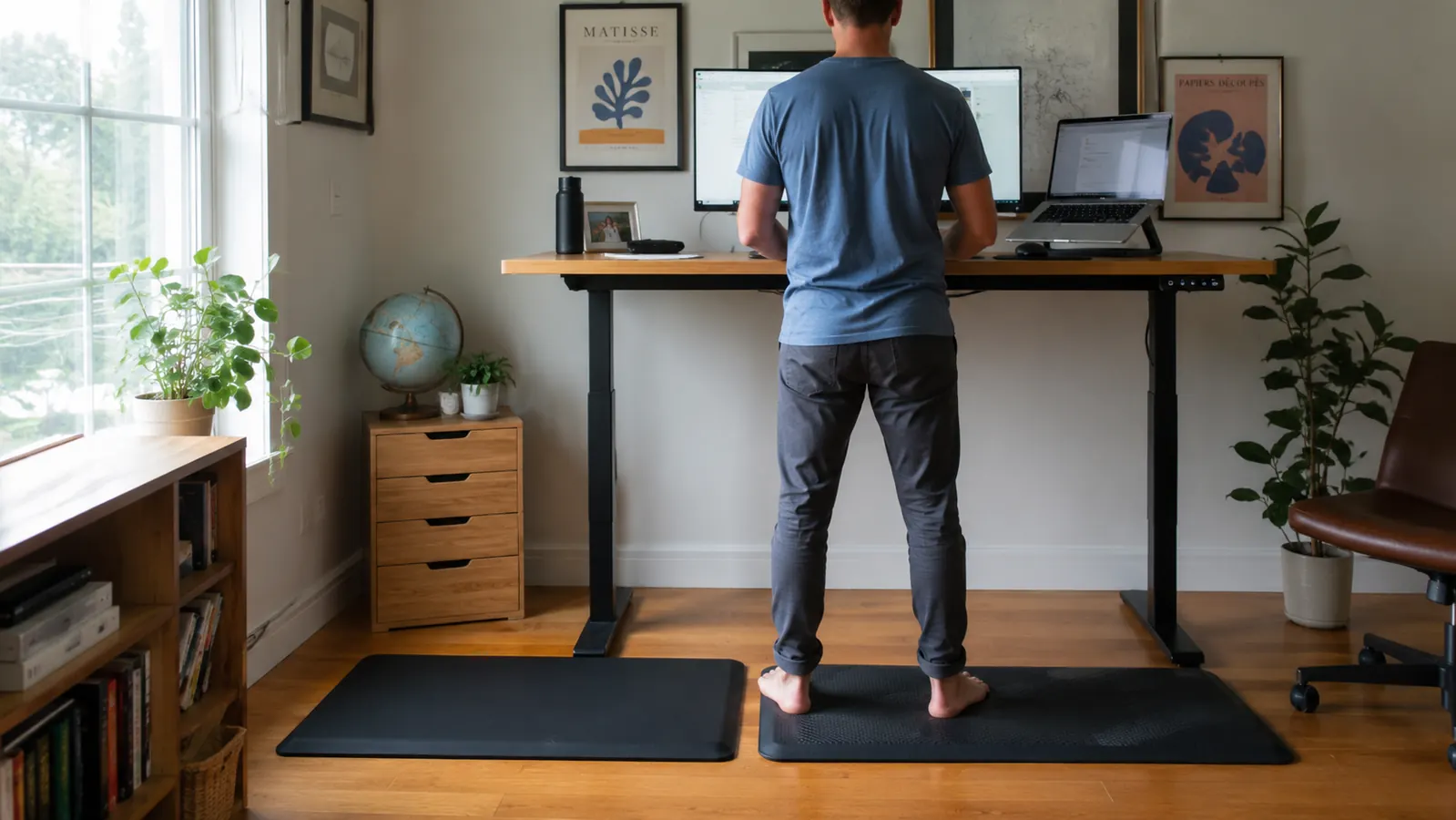
The short answer is that the KANGAROO anti-fatigue mat does the job the Topo Comfort Mat does, at roughly one-third the price. Both keep your feet from screaming after two hours of standing. Both are 3/4 inch thick. Both have beveled edges so you stop tripping over the rim. The difference is terrain: the Topo has a raised central ridge and curved side pockets designed to encourage micro-movements. The KANGAROO is flat, straightforward foam with a no-nonsense surface that wipes clean in about 15 seconds. Whether that terrain design is worth the premium depends on how you actually stand.
I have had the KANGAROO mat under my standing desk converter for just over a year. I tested a Topo for six weeks before that. My take: most home office workers doing 2-4 hours of standing per day do not need the terrain features and will not notice the difference. The people who benefit most from the Topo are those standing 5+ hours per day, who want the mat to serve as a passive foot-movement prompt. For everyone else, the KANGAROO is the pick.
| KANGAROO Anti-Fatigue Mat | Topo Comfort Mat by Ergodriven | |
|---|---|---|
| Price (approx.) | Mid-range option | Check today's price on Amazon |
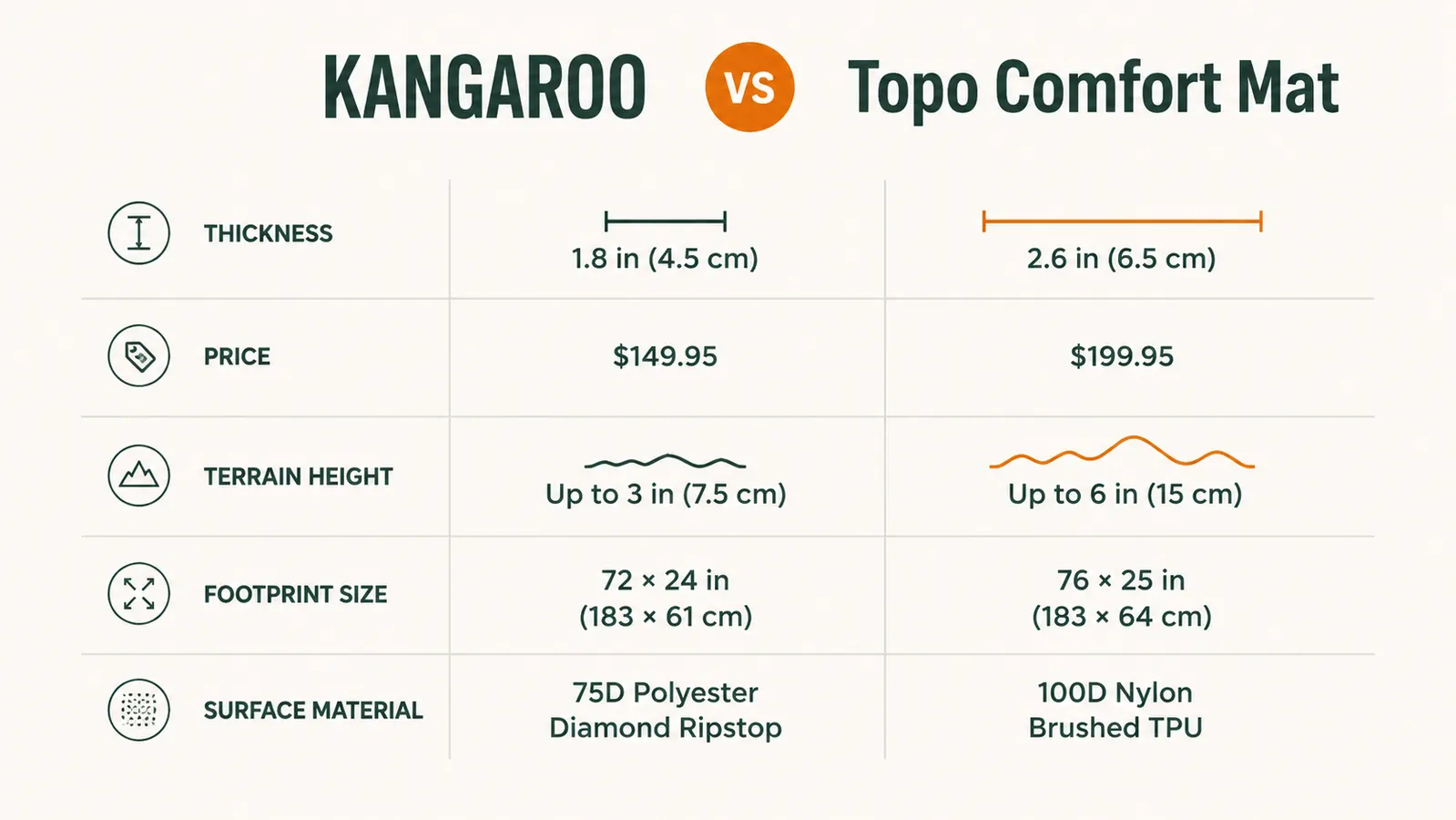
| Thickness | 3/4 inch (0.75 in) | 3/4 inch (0.75 in) base; terrain peaks add up to 1.5 in |
| Surface design | Flat, smooth polyurethane top | Contoured terrain with central ridge and side pockets |
| Footprint (standard size) | 20 x 32 inches | 26 x 29 inches (smaller square format) |
| Beveled edges | Yes, all four sides | Yes, perimeter edge around terrain |
| Cleaning | Wipe with damp cloth, very easy | Grooves trap debris, takes more effort |
| Color options | Black, brown, and others | Black, grey |
| Best for | 2-4 hours/day standing, budget-conscious setups | 5+ hours/day standing, those wanting movement prompts |
| Amazon rating | 4.4 stars, 17,000+ reviews | 4.5 stars, 5,000+ reviews |
Foot fatigue after an hour of standing? The KANGAROO mat costs less than a co-pay.
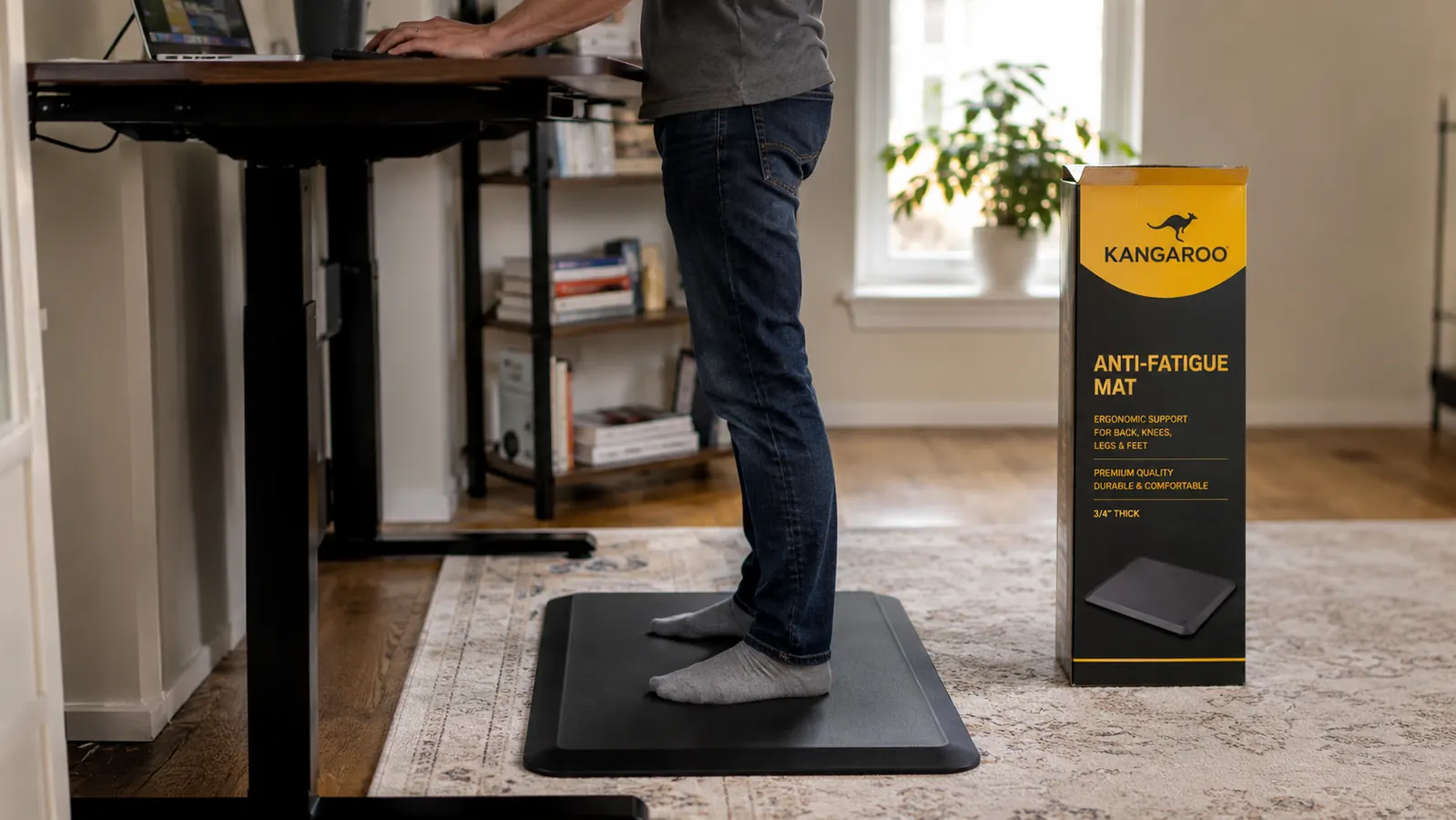
Over 17,000 Amazon reviewers. 3/4 inch thick foam. Beveled edges on all four sides. This is the mat I kept after testing both.
Amazon Check Today's Price on Amazon →Where the KANGAROO Wins
Price is the obvious one, so let me start with what the price gap actually means in practical terms. At a budget price, the KANGAROO costs less than a single month of a standing desk subscription service or the pair of anti-fatigue insoles you might buy to compensate for a bad mat. You are not compromising on core function to save money here. The foam density is comparable to higher-priced competitors in the 70-80 durometer range, which is the sweet spot for anti-fatigue mats. Too soft and you sink through to the floor. Too hard and you might as well be standing on a yoga block. The KANGAROO sits right in the middle.
The flat surface is also genuinely easier to clean. In a home office where you eat lunch at your desk or have pets wandering through, crumbs and hair do not disappear into terrain grooves. A damp cloth takes care of the KANGAROO in under a minute. After six weeks with the Topo, I was using a narrow brush to get debris out of the ridge pockets. Not a dealbreaker, but worth knowing if hygiene is a factor for you.
The KANGAROO is also longer in its standard configuration at 20 x 32 inches, which lets you shift your stance laterally without stepping off the mat. The Topo is more square at 26 x 29 inches. For people who like to plant one foot on the edge of a mat while the other foot rests on the floor, the Topo's format can feel restrictive. The KANGAROO's rectangular shape tracks the natural side-to-side sway most people do when standing at a desk.
Where the Topo Wins
The terrain design on the Topo is not a gimmick. It does what Ergodriven claims: the raised center ridge encourages you to rock your foot forward and back rather than locking your weight into one position. For standing desk veterans who are already on their feet 5 or more hours per day, that passive movement feedback makes a real difference in circulation and foot fatigue over a full workday. The Topo is the better mat if standing for long stretches is your primary mode and you want the mat itself to coach micro-movement.
The Topo also tends to hold its shape better at the terrain features over multi-year use. Flat mats compress evenly from edge to center, and you can feel the center soften over time. The Topo's terrain compresses too, but the structural variation means no single zone takes all the abuse. If you plan to keep a mat for three-plus years under heavy daily use, the Topo's build quality justifies some of the price premium. The KANGAROO is not poorly built, but it is designed for the value tier and shows that design in its longevity at the 2-3 year mark.
The Topo teaches your feet to move. The KANGAROO just gives your feet somewhere comfortable to stand. For most home office setups, the second thing is all you need.
Foam Feel: What 3/4 Inch Means on Each Mat
Both mats advertise 3/4 inch thickness, but they do not feel the same under bare feet or socks. The KANGAROO has a smooth polyurethane top layer over a slightly firmer foam core. It feels dense and supportive, like a quality bath mat that happens to be engineered for standing. The Topo has a softer surface texture that is slightly grippier, which some people prefer and others find slightly too grabby against sock material.
The Topo's terrain peaks add additional cushion at specific pressure points, so your heel, arch, and ball of foot all land at slightly different angles depending on where you position your foot. That is ergonomically sound. It is also slightly disorienting for the first week until you develop a feel for it. If you work barefoot regularly, the Topo's terrain design comes through more noticeably and you will either love it or find it distracting. With shoes on, both mats feel more similar than their price difference suggests.
Durability After Sustained Daily Use
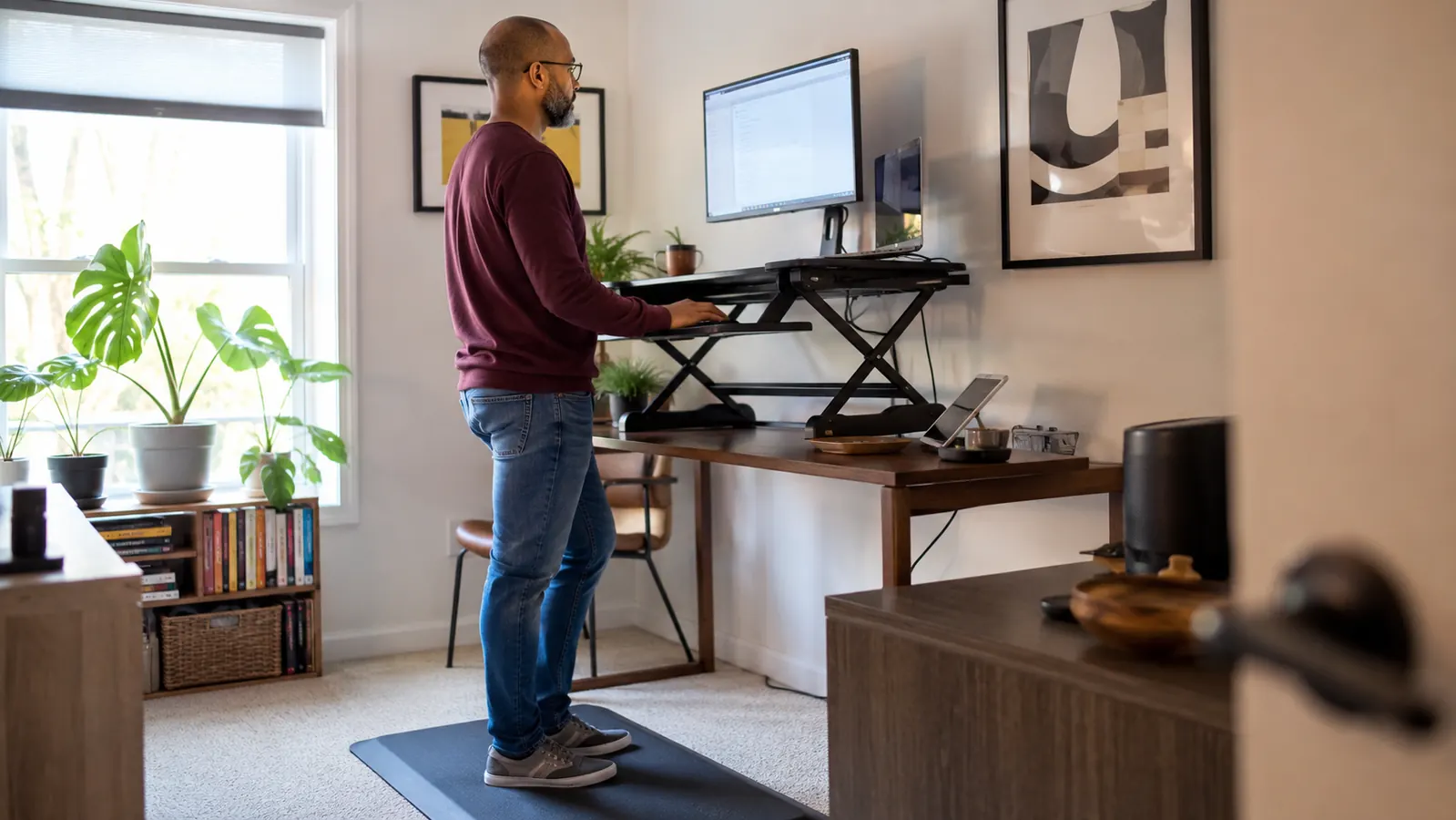
I have had the KANGAROO mat under my feet for roughly 250-260 working days. The center has compressed slightly, which is normal for polyurethane foam under sustained load. It has not bottomed out, meaning I still feel cushion between my heel and the hard floor. The beveled edges have held their shape with no peeling or curling. I weigh 185 lbs and stand in the same position most of the time, which is the worst-case scenario for compression, and the mat is still functional.
The honest ceiling on the KANGAROO is probably 2-3 years before you start to notice meaningful compression. At a budget price point, that works out to a reasonable annual maintenance cost for ergonomic comfort. The Topo at a premium price should reasonably last 4-5 years for a similar user profile. Run the math and the per-year cost is closer than the sticker prices suggest. The performance difference over those years is the deciding factor, not the math alone.
Who Should Buy Which
Buy the KANGAROO if you are new to standing desks or standing desk converters, you stand 2-4 hours per day, you want a mat that fits naturally under a rectangular desk converter footprint, or you are working with a tight home office budget and want the ergonomic win without committing to a premium price point. The KANGAROO covers all of those scenarios well. It is the mat I recommend to anyone setting up a home office from scratch because it delivers real anti-fatigue performance at a price that does not require justification.
Buy the Topo if you already stand 5+ hours per day and flat mats have stopped working for your feet, you prioritize terrain feedback and active foot engagement over simplicity, or you are making a longer-term investment and want a mat that will stay structurally sound for 4-5 years. The Topo is a legitimately great product. It is just overkill for the typical home office worker who stands for a few hours between sitting sessions. If that describes your current setup, the extra money goes further spent on a monitor arm, a better chair, or a second mat for the kitchen.
For most home office setups, the KANGAROO is the right call at the right price.
3/4 inch thick foam, beveled edges, easy to clean, and 17,000+ verified buyers. It has held up for over a year on my standing desk converter without a complaint worth writing down.
Amazon Check Today's Price on Amazon →